Polygon Networks
Team reflections and insights from our recent group project
Meet Our Team 🤝

Yili Luo
COO → Sales & Marketing VP

Rachel Tan Li Qi
R&D Director → CEO

Abigail Lim
VP of R&D → CFO

Parnasree Samanta
Sales & Marketing VP → R&D VP

Iqra Nihal
CFO → R&D Director
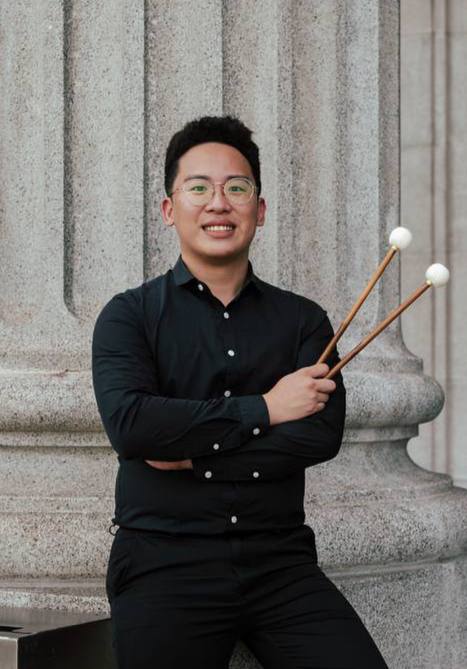
Jeremy Fong
CEO → COO
Yili Luo
COO → Sales & Marketing VPAs the Chief Operation Officer (COO), one challenge during the simulation was the inability to execute projects because of the lack of required capabilities, which made delegation more difficult and slowed our overall progress. Through the simulation, I began to realize the importance of understanding individual strengths and creating an environment for growth. I came to appreciate that employee engagement is not separate from performance; in fact, it is the foundation of it. I learned that identifying capability gaps early can significantly improve both morale and execution. More importantly, when employees feel supported, it reduces our company's disengagement and the risk of turnover. I was also amazed by how coordinated our team remained even after our original roles were shifted. Such transitions could lead to confusion, but instead they strengthened our team's collaboration. We worked closely with the previous leader, gained valuable insights from their experience, and were able to make quick yet thoughtful decisions during a period of uncertainty. A key turning point was also recognizing the biases we had when making decisions. For instance, at the start we prioritized speed over deep discussion and relied too heavily on familiar perspectives. By acknowledging these biases, we were able to pause, listen more, and reach a common consensus. This not only improved the quality of our decisions but also strengthened our team's mutual respect and trust and gave everyone the opportunity to voice concerns about their roles. Another important lesson was understanding the value of planning before execution. We realize that investing effort into clear planning, such as expectations and timelines, actually reduced execution time. When everyone understood the shared vision and their individual responsibilities, we were able to execute efficiently and confidently. What mattered most was that we had a clear direction and everyone was aligned toward the same goal. We were able to adapt, communicate clearly, and support one another. This has allowed us to execute effectively and eventually rise to the top of the chart. More than the achievement itself, I also value the growth in mindset and the learning to lead with empathy, self-awareness, and clarity.
Rachel Tan Li Qi
R&D Director → CEOAs the only department working as a 2-man team, we had to navigate not only working across departments, but we also had to find a way to work well within our own team. For example, when we wanted to allocate manpower to the different activities, we had to reconcile our total manpower across 2 different devices. This meant that both of us had to work very closely with one another to ensure the most efficient allocation of our resources. On top of that, while the 2 of us worked well together, working under the director kept me from speaking out about certain decisions, as I did not want to disrupt the hierarchy. I can see how this may play out in the future when we enter the working world. However, it is up to us to learn how to navigate this situation better. Another factor that contributed to our change in working style/strategy in the future quarters was how we thought a lot more about empathy when we made each decision. For example, when we were working to push out toughtek, we realised that many of our employees would be working at maximum or close to maximum capacity. In this scenario, we put ourselves in their shoes. If we were swamped at work, we would love for our company to recognise those efforts and reward us in certain ways. That is why we decided to engage our employees more and push out more wellness activities, despite their engagement bars still being somewhat full. Lastly, I think it was much easier for me to assimilate into the role as CEO after many rounds of being the director of R&D, as compared to being the CEO from the start. This is because I was able to play with and get to understand the different functions of the platform, so I could better advise on how to proceed with the execution of our strategy in the last quarter. With this experience, I can see why most CEOs actually start their careers building more breadth, because it is important for an executive to truly understand their company before being at the top and making these company-wide decisions.
Abigail Lim
VP of R&D → CFOAs the VP of R&D, the pressure of starting projects fell onto my team and I; conversely, this also meant that when projects were slow to be completed, it felt like the 'fault' of the other departments. Combined with the time crunch, this made communication difficult in the first few rounds. The limited budget also made it feel like we were fighting to have our department be the 'most valued' or important in a sense when we were fighting for/discussing the budget, and given the whole context, R&D definitely seemed to be the most important to appeal to our lovely customers. However, after the role swap, I realised that all departments are equally important. We could have the best R&D innovations but without operational efficiency or marketing campaigns, we wouldn't benefit our customers as much as we could. After our CEO set the direction for our market strategy, we were also more clear in the add-ons to be included, and as such, this also gave us greater autonomy to suggest ideas that we felt would benefit the company. Losing our workers was also a costly lesson we had to learn, especially since they left the company after training. This made me think about my own experience in prior internships where I would feel a mild twinge of guilt for having learnt from companies with no intention to stay; while internships are slightly different from long-term jobs, and treating employees well with the intention of retaining them is important, I think that it is important to see the world as a diverse collection of multiple different companies within layers of industries, where we can circle around and learn from and in different places. This is beneficial both for companies, where pouring in effort into training retains and attracts effort, and for employees who strive to learn more and transfer those skills to new roles accordingly. This was especially so during the role swap; although we weren't the ones undergoing the direct training, we still learnt a lot from our individual roles and this transfer of talent paralleled the training our employees received and benefited from. I believe it is this very culture of learning and growth that is applicable beyond individual company strategy and brand direction, to foster healthy competition and individual growth.
Parnasree Samanta
Sales & Marketing VP → R&D VPWhen I was Sales & Marketing Director, I naturally gravitated towards long-term planning. I wasn't just focused on hitting targets for the current quarter, but on building the department in a way that would sustain performance in future quarters as well. This meant training employees with upcoming goals in mind and thinking about how today's decisions would impact our capabilities down the line. In hindsight, this long-term orientation was something shared across departments, which helped create a baseline of strategic alignment even in the earlier rounds. However, when roles were reshuffled and I transitioned into the R&D Director role, my perspective on leadership expanded significantly. Stepping into a completely different function without full context was much more challenging than I expected. There were operational details, constraints, and decision rationales that were not immediately visible from the outside. This experience made me realise how critical proper communication and structured handovers are, especially in fast-paced environments. I was extremely grateful for how patient and supportive my teammates were in walking me through existing plans, explaining workflows, and sharing their thought processes. Their empathy made what could have been a disruptive transition much smoother. This role change also highlighted to me that leadership is not only about planning well within your own department, but about ensuring continuity beyond yourself. Effective leadership requires documenting decisions, communicating intent clearly, and creating systems that allow others to step in without losing momentum. Overall, this experience taught me that strong execution is built on trust, empathy, and clarity. Whether it was planning ahead in Sales & Marketing or learning to adapt quickly in R&D, I became more aware of the human side of decision-making. Seeing how much patience, openness, and mutual support mattered reinforced my belief that sustainable performance comes not just from good strategy, but from people who feel supported and aligned.
Iqra Nihal
CFO → R&D DirectorBeing CFO in the business simulation taught me that financial decisions are deeply human, not just numerical. Allocating budgets across R&D, Sales and Marketing, and Operations meant constantly trying to understand what each team was dealing with. Every request for funding reflected real pressures, whether it was delayed projects, overstretched employees, or gaps in skills that needed time and investment to fix. When resources were limited, I could see how quickly tension could build, and I realised how important clear communication, trust, and shared direction are in keeping teams aligned rather than competitive. Later, when I switched roles into R&D, I experienced those pressures from the other side. It was very different being directly responsible for project progress and feeling the stress that came when projects started running late or when the quarter was ending. That shift helped me understand why departments sometimes become protective of their needs. What once looked like simple budget decisions felt much more personal when I was the one affected by them. Seeing employees work close to their limits, and even losing trained staff we had invested in, also made me reflect on the human cost behind efficiency. I learned that strong financial leadership is not only about performance or optimisation. It is about understanding people's realities, listening to different perspectives, and making decisions that support both results and wellbeing over time.
Jeremy Fong
CEO → COOThroughout the simulation activity, I realised that when leading a team, the leader does not need to be the most knowledgeable person. Initially, as the CEO, I felt that I needed to understand everything. This ranged from the specific responsibilities of each role to the overarching strategy of our company (and on a meta level, the mechanics of the simulation). I assumed and relied on this assumption that having a leadership position meant being in full control and understanding all the time. However, as the simulation progressed, I began to recognise that leadership is not about having all the answers. It is more important to create an environment where others can be equally empowered to contribute theirs as well so that everyone, including the leader, can learn too. It became apparent that as a result of this, that it was completely okay to not always be in control of every piece of information. What mattered the most was how I could harness the collective strength of my team and support them where they needed guidance. By doing so, the team became more coordinated and confident. We began to execute decisions faster and with conviction, listening to each other more and aiding when in need. I realised that my role as a leader was to connect the dots, by bringing the best in my teammates, empathising where there were gaps and ensuring no one gets left behind. When I started to place more trust in my team and stopped trying to rely on my own limited skills, I felt that not only did the team perform better, but I grew more confident and effective in my role. Carrying this mentality forward into the working world, I strongly believe that it is essential to remember that effective leadership stems from trust. This is especially in those who have more experience in certain areas. There will always be instances where I will not be in control or be a victim of information asymmetry. As someone who tends to be plagued by action-oriented bias, learning to pause and rely on the insights of my peers is ever more crucial. Hopefully, this would lead to more thoughtful decisions and allow me to contribute more meaningfully. This mindset would be something I would also intentionally maintain as I continue to grow in my career. As I progress and begin leading my own team, I hope to embody the same culture that I once learned to value during this simulation. This helps to better create a culture of openness and synergy in my team when people feel that their voices are heard. Ultimately, this simulation reminded me that leadership is less about control and more about connection. It is important to know when to step back and guide and when to trust. I would like to continue to develop this balance, in hopes that I will be able to better grow as a leader and as an individual.